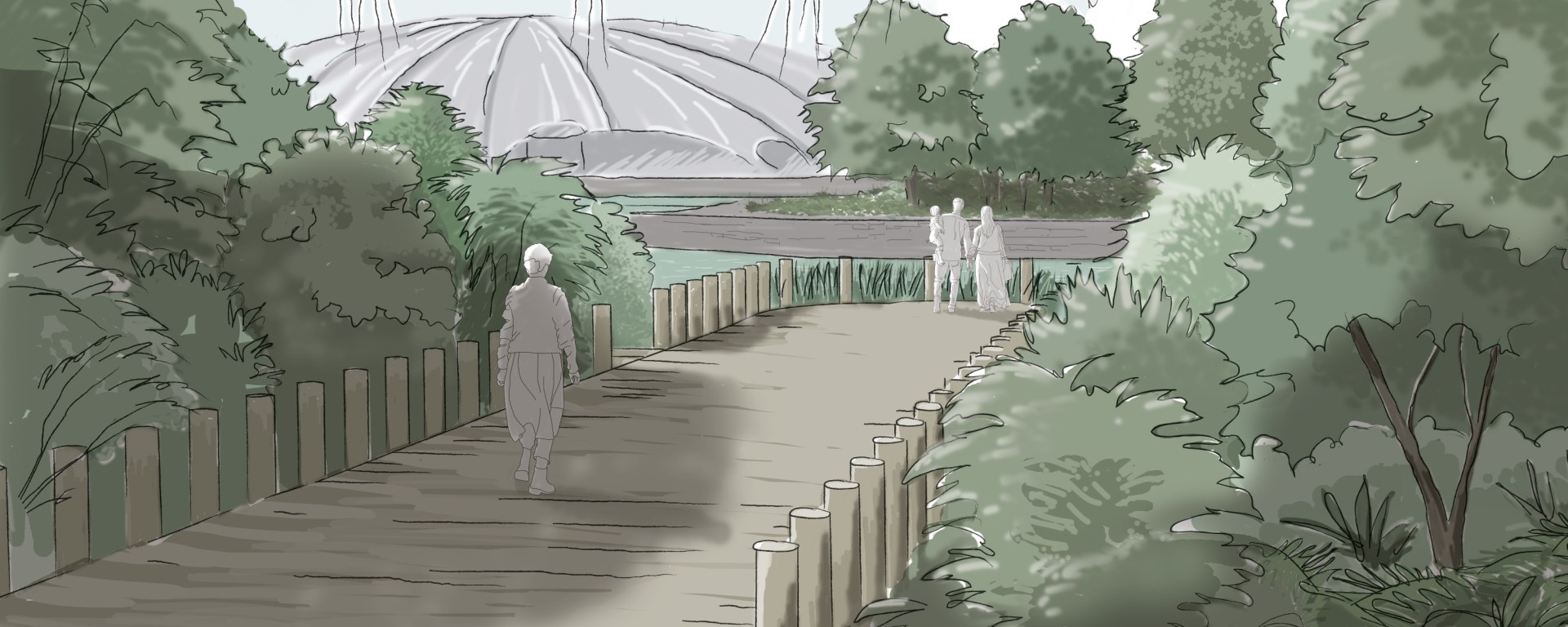
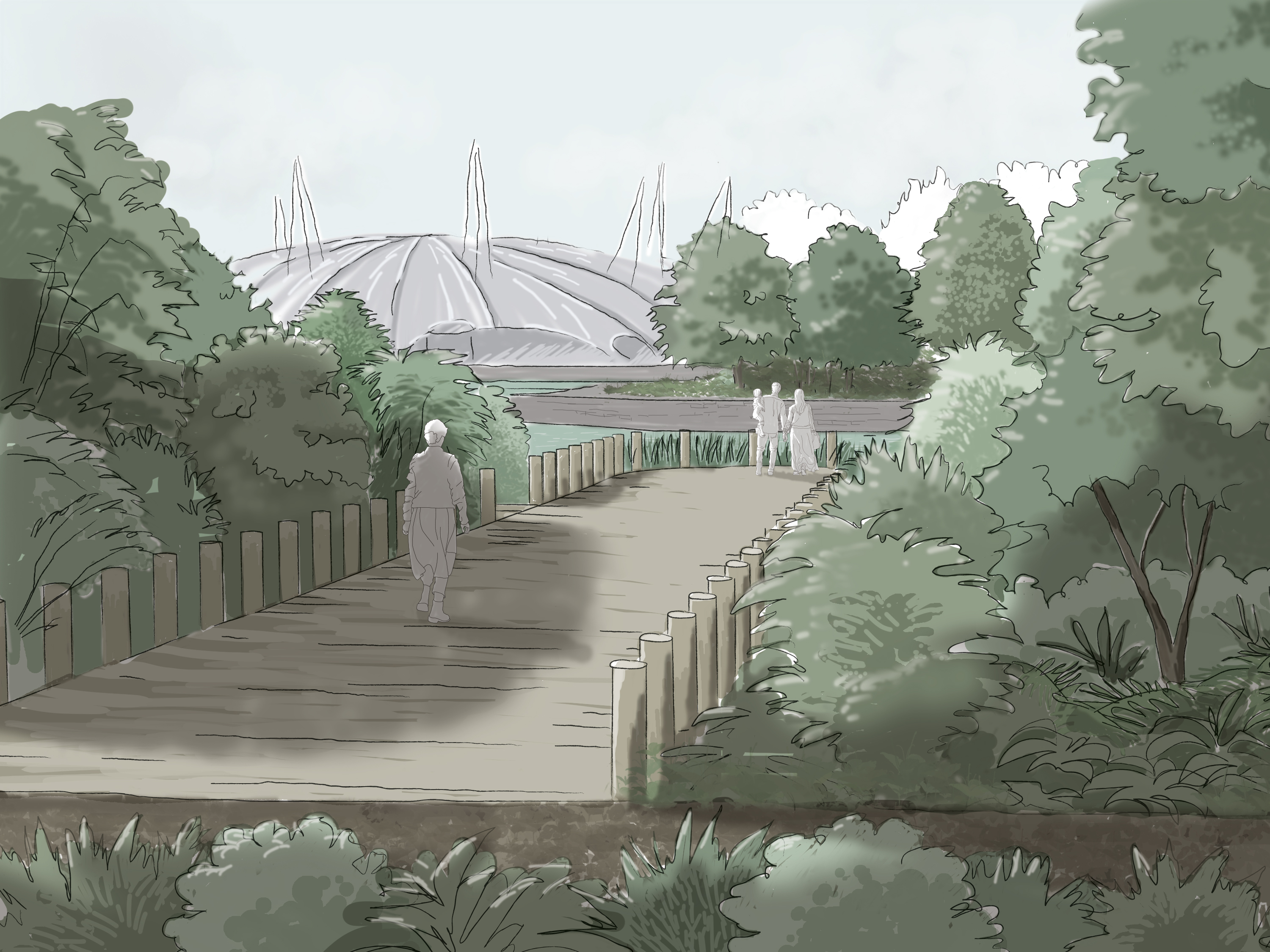
East India Dock Basin, a local nature reserve in East London, was once part of a large network of docks operated by the East India Company, the entity which, for decades, commercially and politically ruled most of modern India. Today, it is surrounded by the creeping metropolis, with 30+ storey tower blocks sprouting up in a tight urban mesh. It is one of very few green spaces in the borough of Tower Hamlets, and pressure on its services is going to increase further with the redevelopment of neighbouring Orchard Wharf as a residential project with more than 200 homes and accommodation for 1,400 students. Silt has also been building up in the basin, with every receding tide leaving further alluvial deposits, adversely affecting species of diving birds and detrimental to biodiversity.
This project is about harnessing the power of natural processes, from silt to vegetation, to bring back the layers of history which have occupied the site and to shape a lasting identity for the former dock basin.
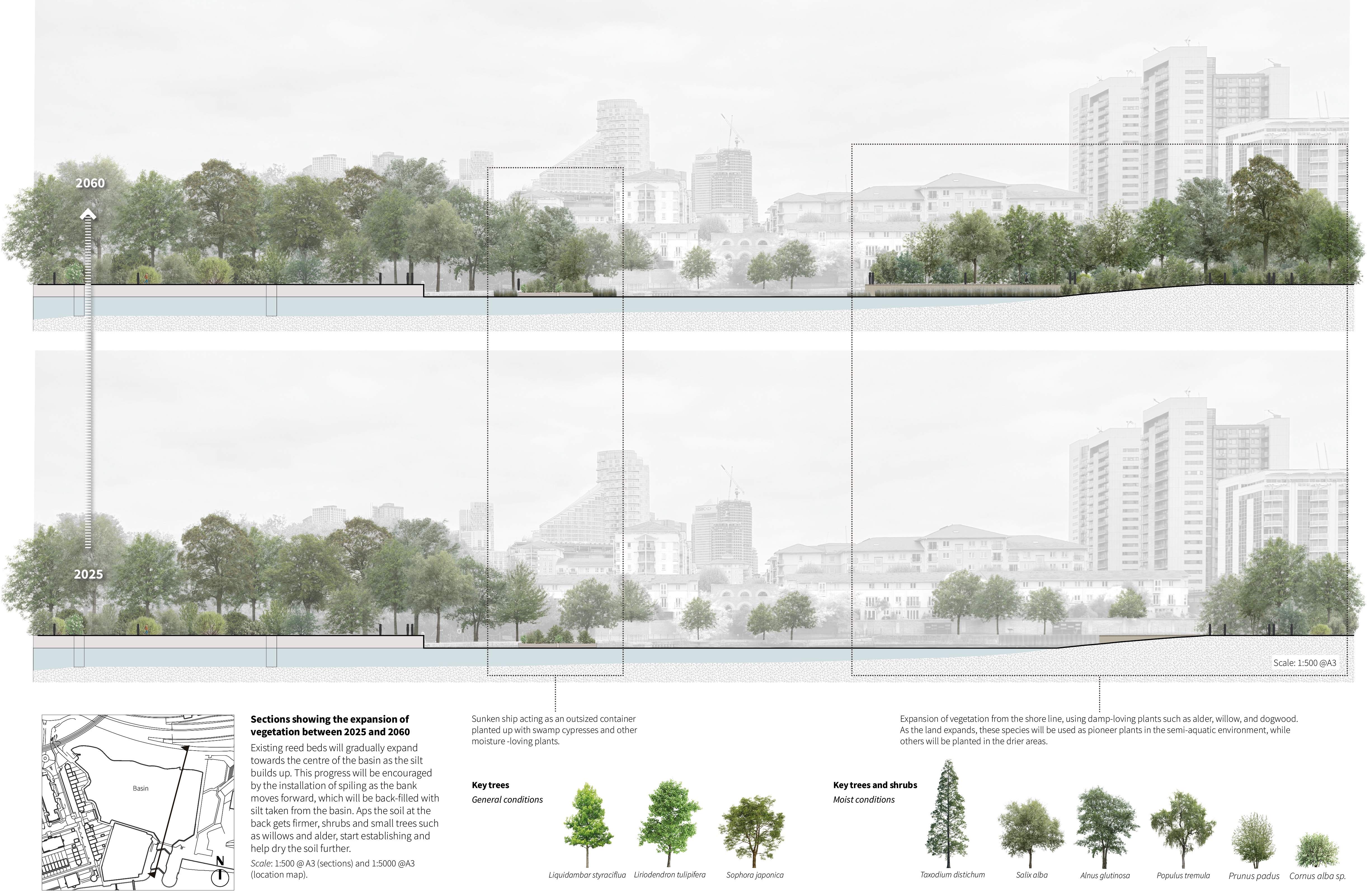
Harnessing the power of natural processes
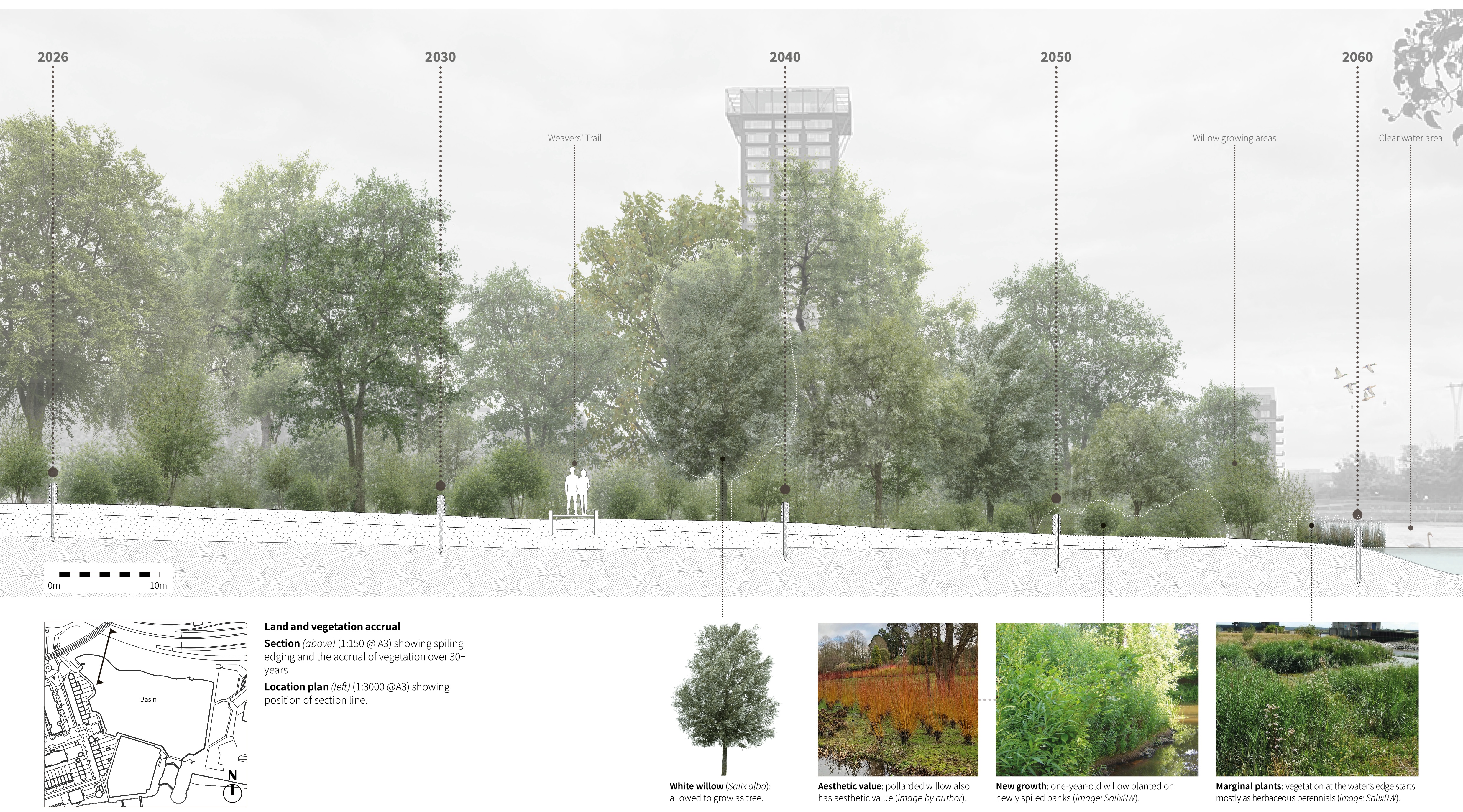
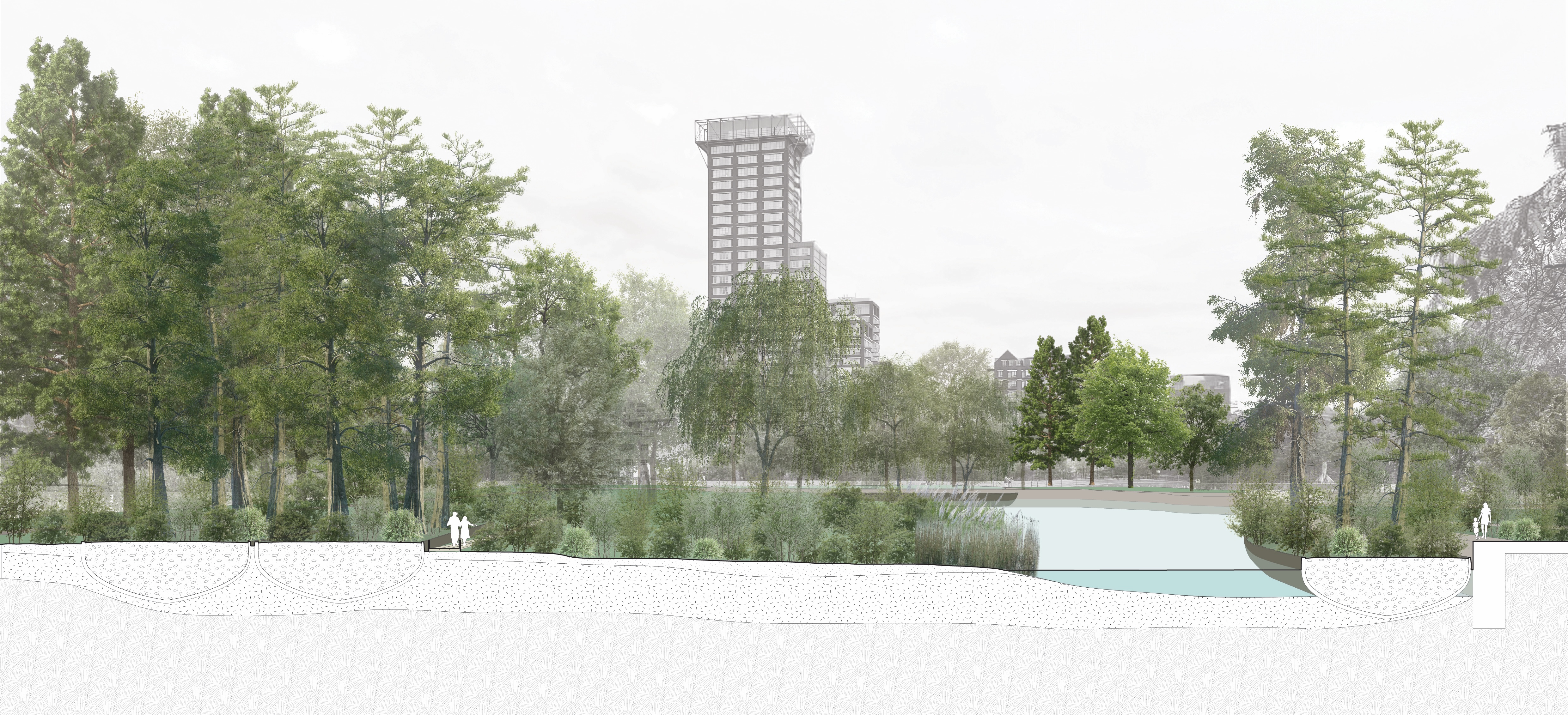
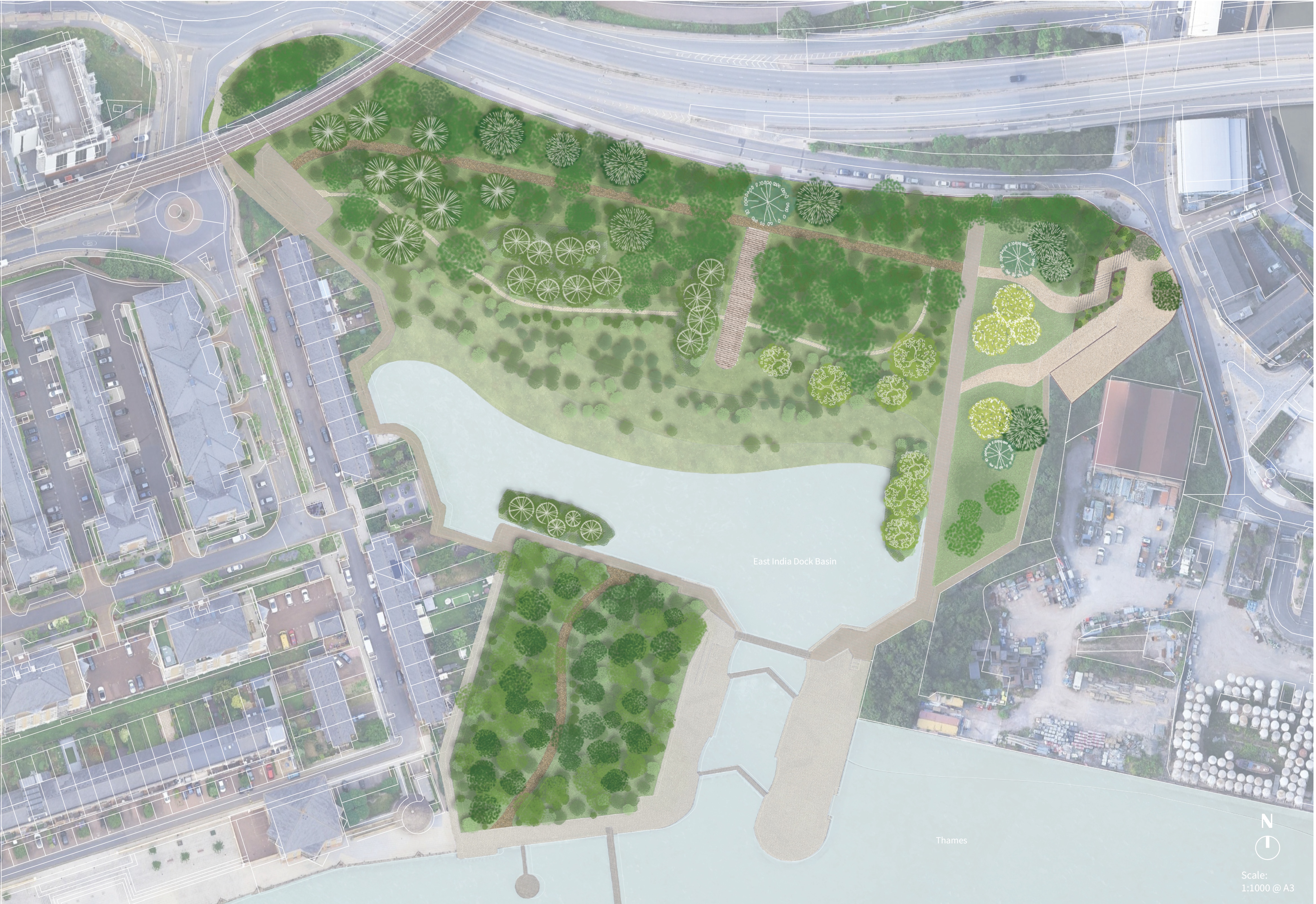
The project aims to work with the natural siltation process to expand the land mass in the basin, allowing vegetation to expand and making more land available for ground-dwelling species. Silt will be removed from the south side of the basin and deposited on the north side of the basin; the resulting terraces will be spiled with locally grown willow, and built up to just above high-tide levels. This will further support biodiversity and create a more resilient local ecosystem.
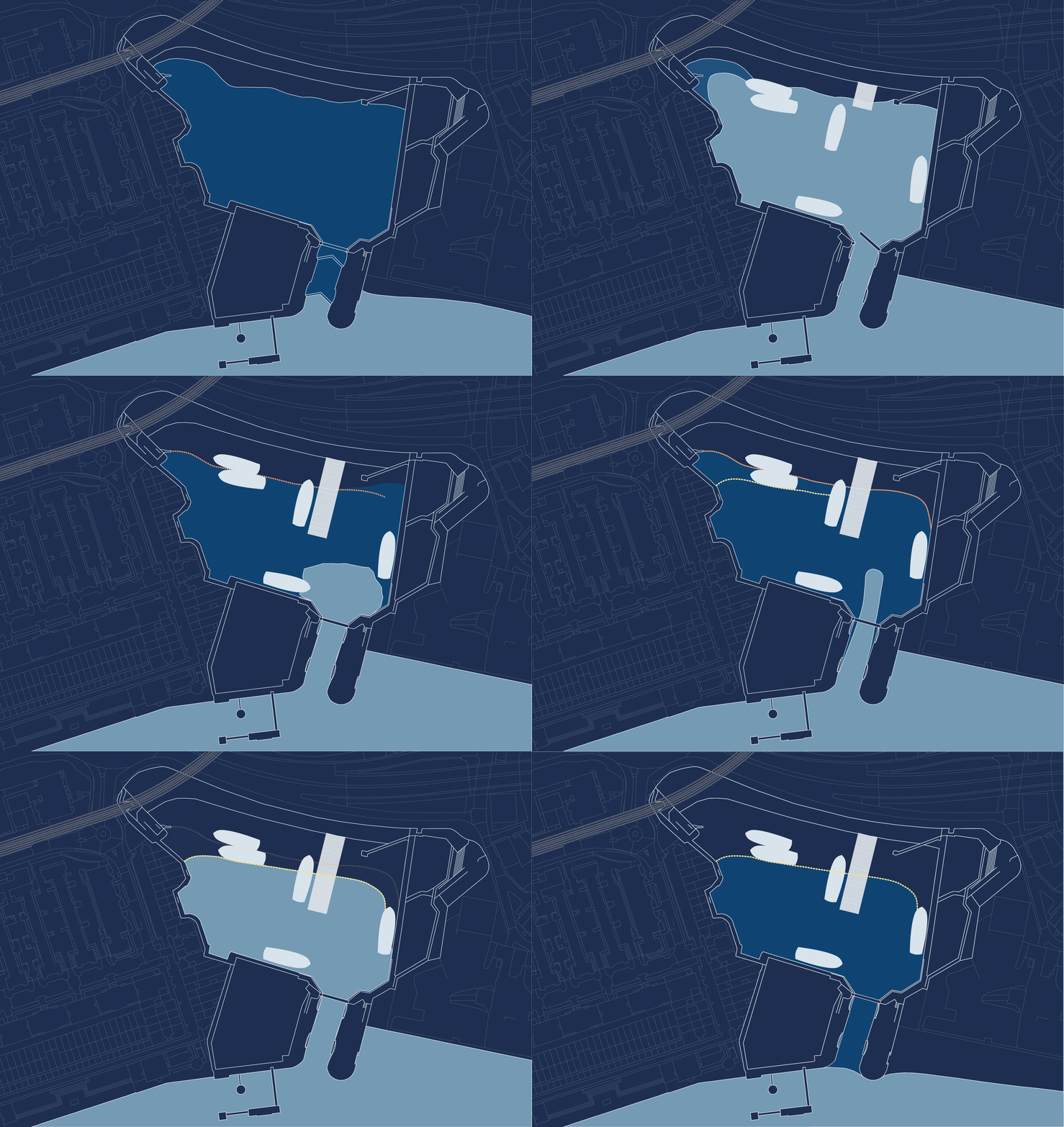
Reviving the site’s legacy
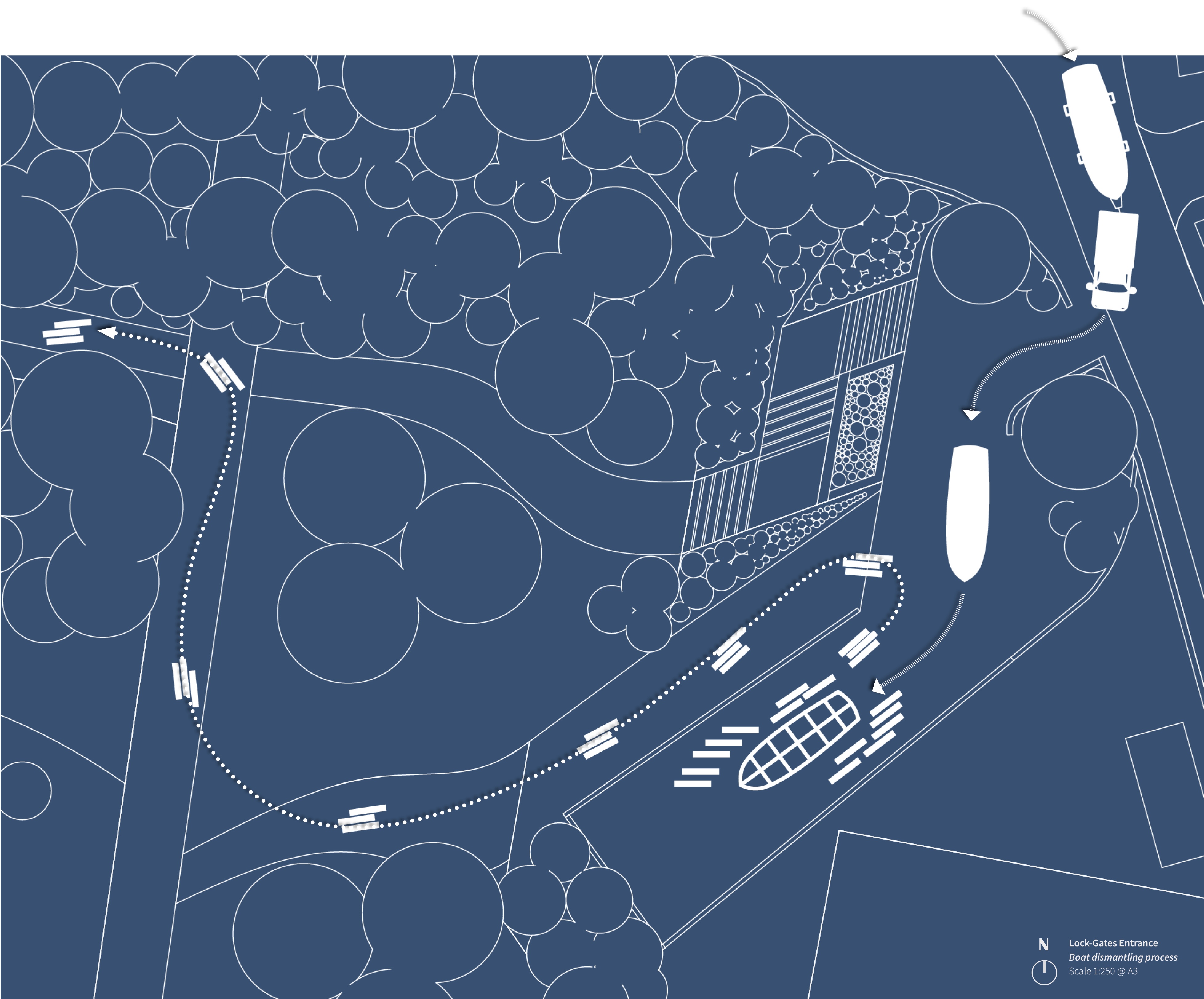
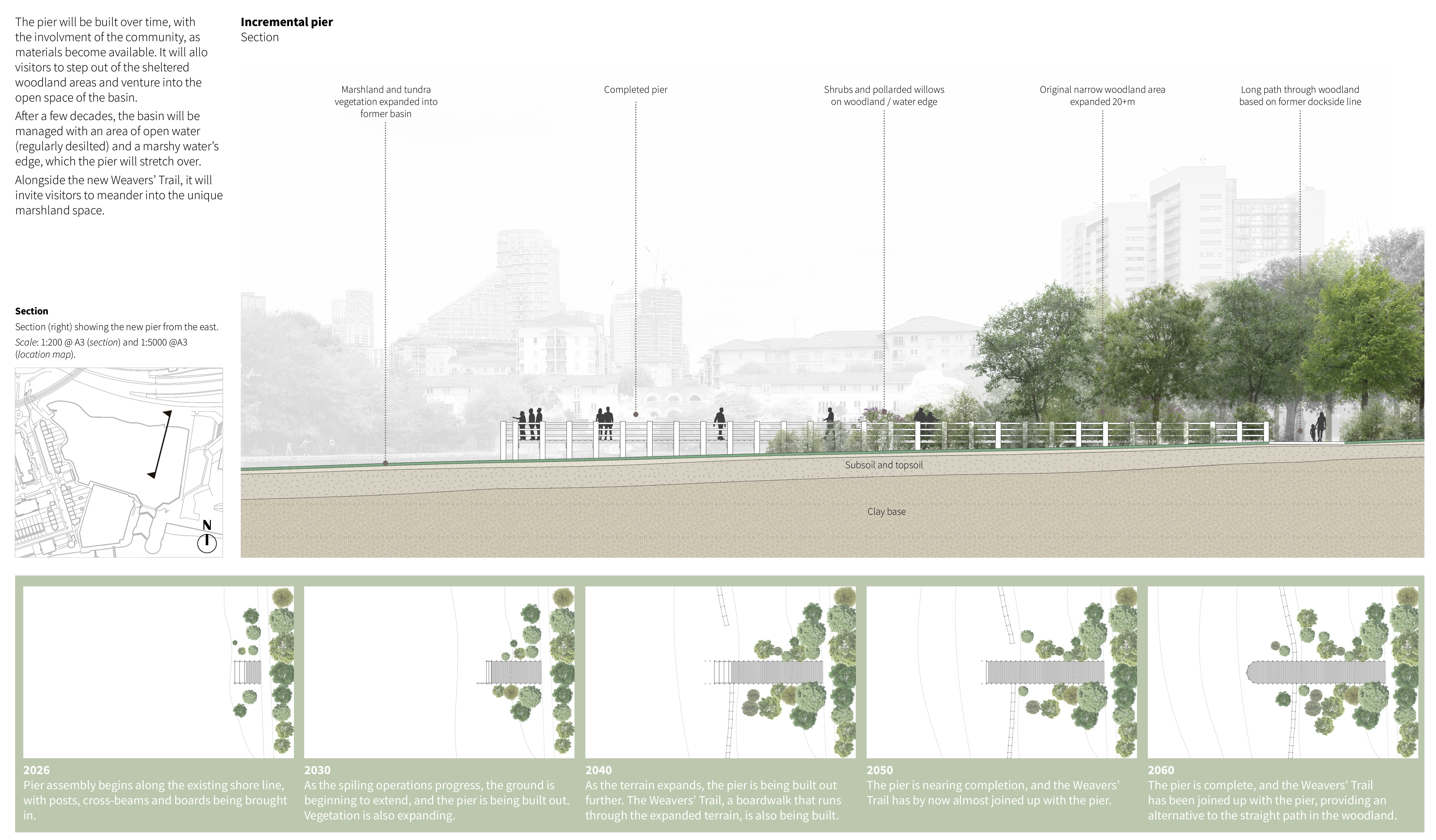
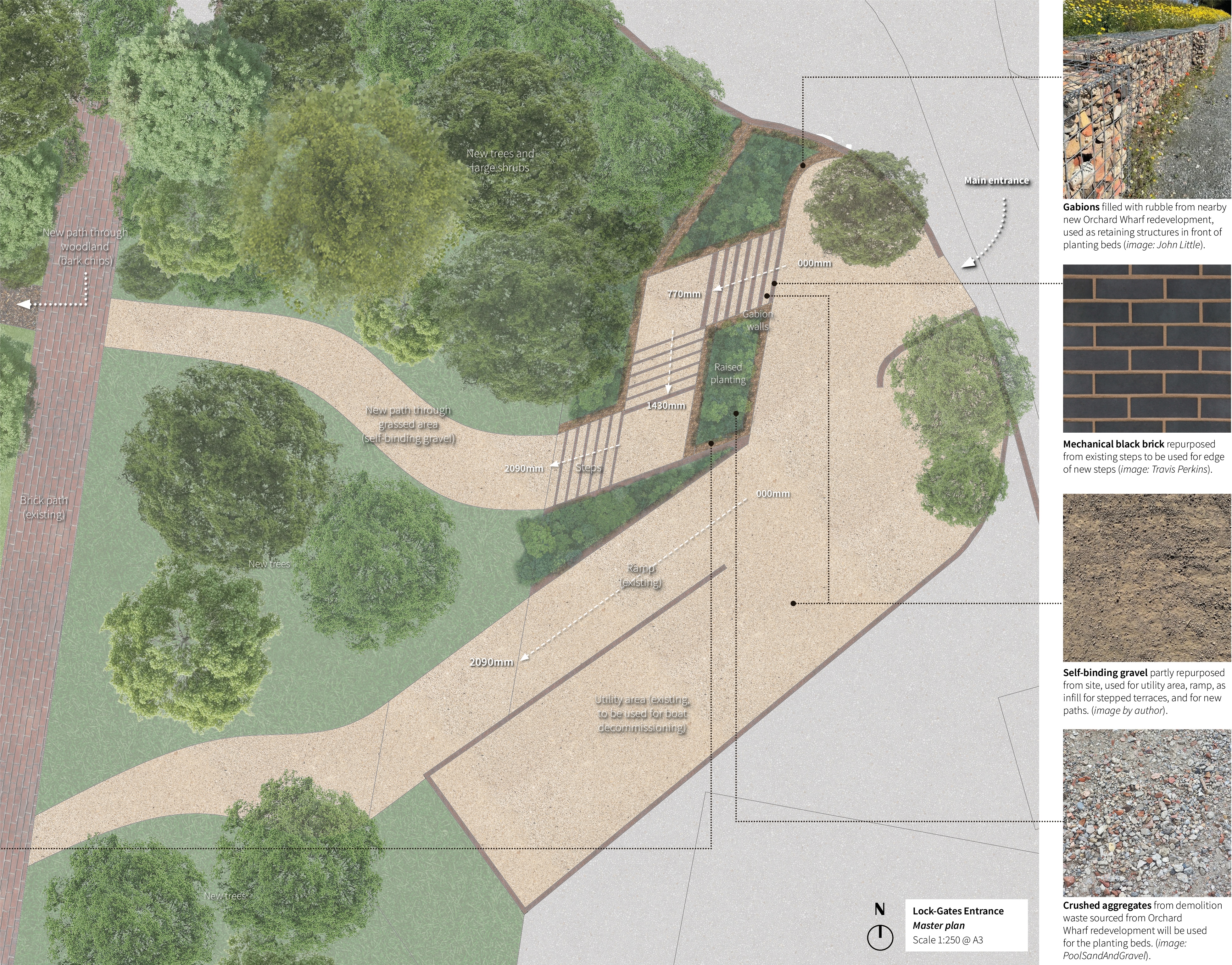
Several features will also reference the site’s historical legacy, from reinstating a former jetty using upcycled material, bringing back the memory of East India ships by repurposing decommissioned ships, and re-opening a path along the old dock side to create a circular route around the basin.
Reinventing the picturesque landscape for future generations
Finally, the project will open vistas around the site, working with key historic focal points and creating a sense of drama in the manner of the picturesque landscape movement, which emerged when the East India Company was at its peak. It will be a landscape designed from the past to serve future generations.
///

