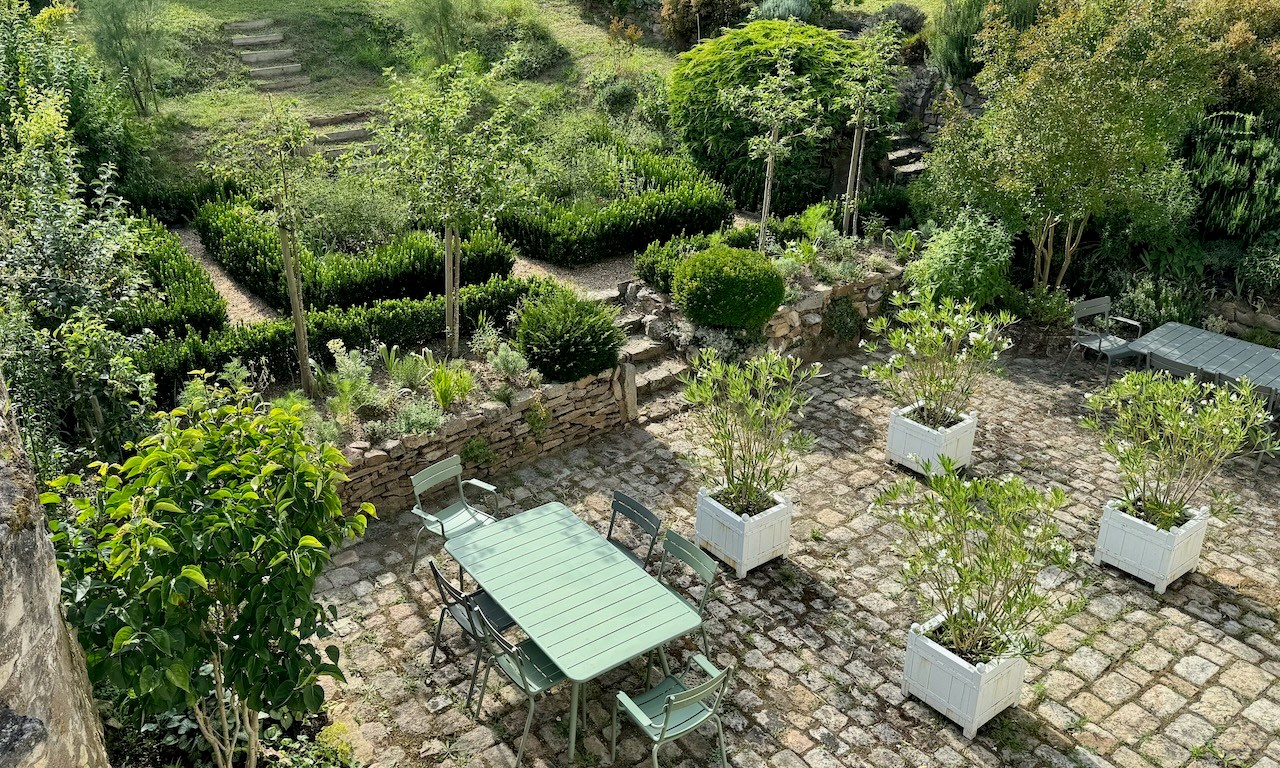
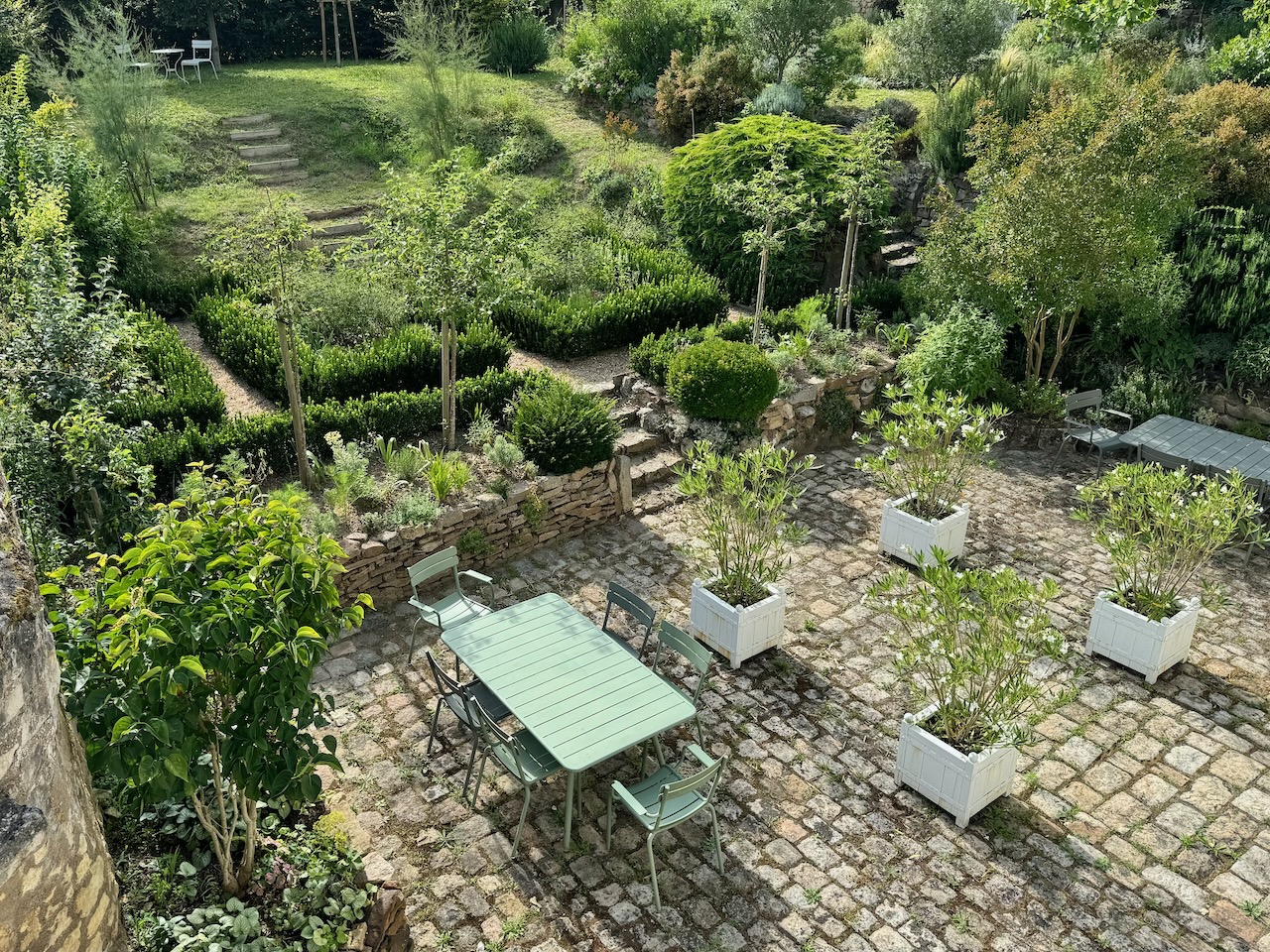
Inspired by Vita Sackville-West’s famous creation at Sissinghurst, this back garden takes a formal approach to design and uses resilient plants that require little to no maintenance and can cope with weather extremes, to deliver a white garden for the 21st century.
Sited against the sunny, south-west facing back wall of the house and protected by high walls, the garden is a favourite spot for al fresco lunches in early spring, and for casual drinks from the summer until late autumn. Its relative openness also means it is exposed to sharp westerly winds in the winter, and to searing heat in the summer.

The classical lines of the house were extended into a formal design approach, which followed two main strands. The first one was to divide the large patio into cosy areas with defined purposes.
On the right, in the most sheltered corner, a dining booth catches the sun early in the season, moving into dappled shade as summer progresses. On the left, a lunch area, closer to the kitchen and ideal for mid-morning coffee and summer lunches.
Between the two, a group of Versailles planters helps break up the space and invites visitors to journey up to the raised formal garden. There, rectangular beds create a strong symmetry, with soft gravel paths to amble around in a more intimate setting.
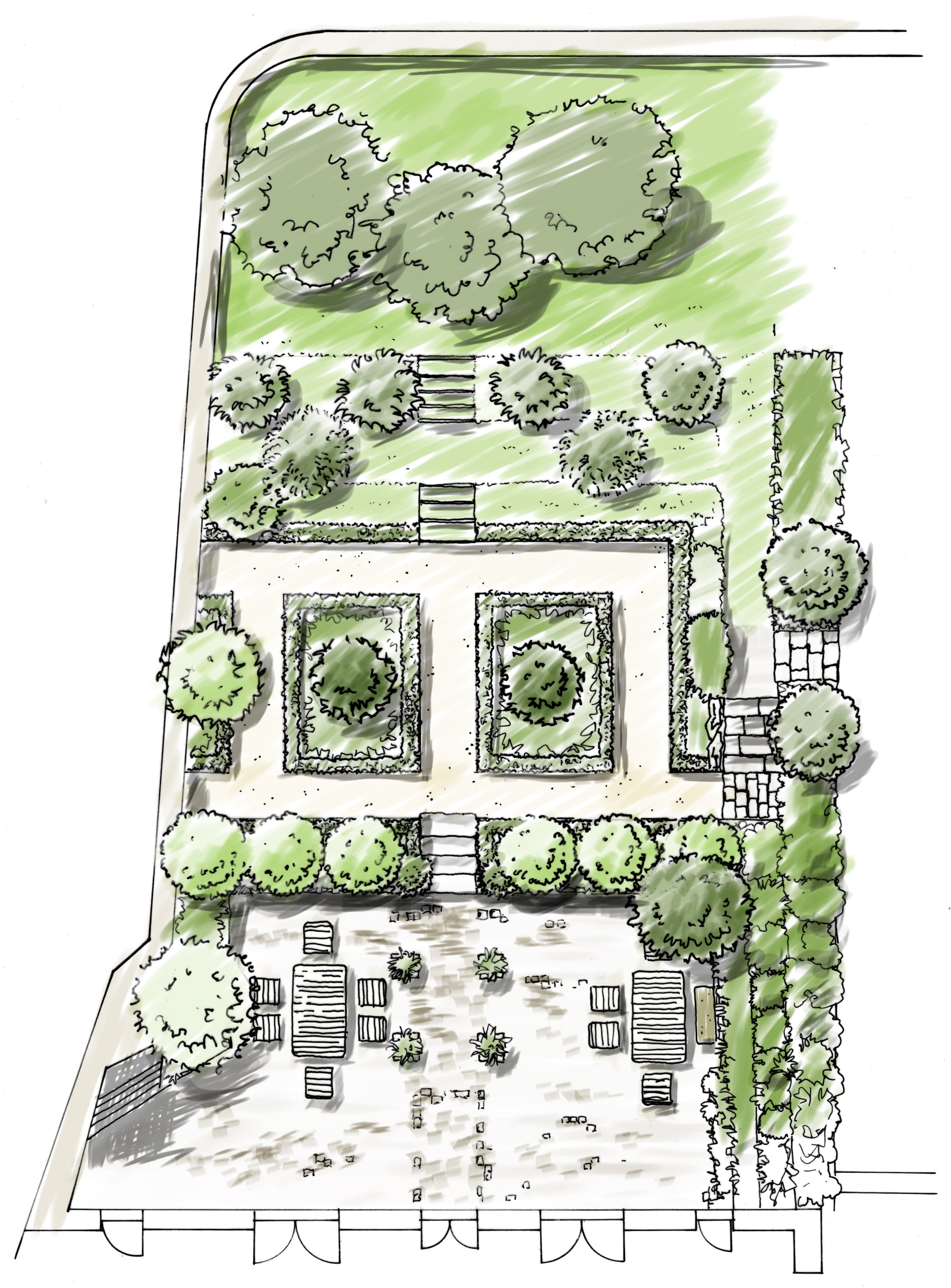
At the other end of the formal garden, a previously closed embankment was opened up with steps leading to the top of the garden, increasing flow and visual dialogue between the different parts of the site.
The second strand involved developing the planting. This started with a small grove of evergreen oaks and a beech hedge at the top of the garden. These act as a windbreak and provide a sense of seclusion from nearby houses.
In the formal part of the garden, a low Japanese spindle hedge (Euonymus microphyllus) frames the linear beds and borders, before the garden loosens up into the lesser kempt reaches of the estate.
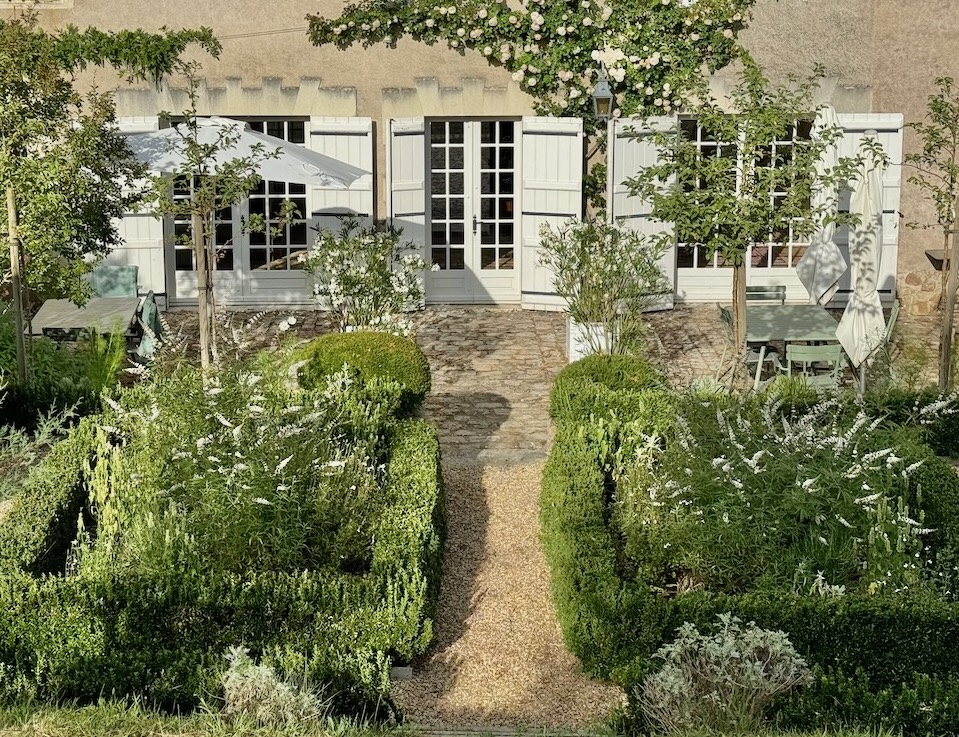
The planting in the central beds had to be able to contend not just with freezing temperatures in the winter and extreme heat in the summer. The soil, claggy clay with a high chalk content, often gets soggy in the winter, and it tends to dry up in the summer. Grit and sand, as well as organic matter, were worked into it, to improve drainage and help reduce water-logging. Two seasons later, the planting has established and has started creating its own microclimate in this part of the garden.
Vitex agnus-castus ‘Albus’, a white cultivar of the Chaste Tree, provides a focal point in each of the central beds. These large shrubs will fill out and grow to about 2.5m. A late-flowering large shrub with pepper-scented foliage, Vitex provides colour at the time the house is occupied, and an ongoing nectar supply for pollinators as summer draws to a close.
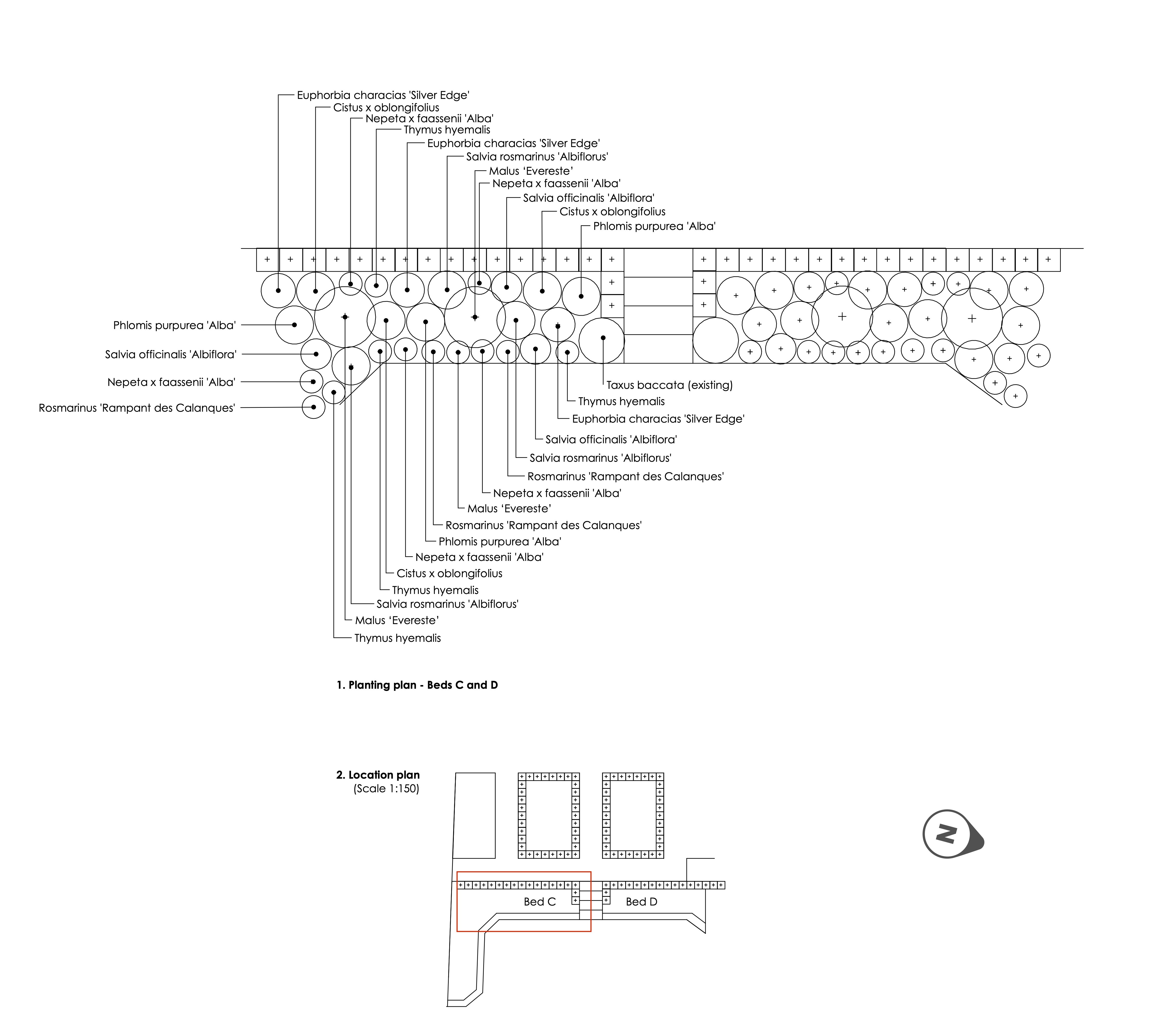
The under-planting includes white Valerian (Centranthus ruber ‘Albus’), white-flowering cultivars of rosemary, nepeta and lavender, while shrubby Salvia ‘Gletscher’ delivers an almost uninterrupted display of bright white flowers from May onwards.
Before and after


KEY PLANTS


 GILG GARDEN DESIGN